A merchant account
A business account that receives the money from card payments before it is paid out to your bank. Every card payment settles through one, and each account is reviewed and approved before it opens.
Merchant services are what a business needs to accept card payments. They cover four things: a merchant account, a processor, a terminal or gateway, and support. smpl brings all four together in one account. You take payments at the counter, online and by phone, with one company to call.
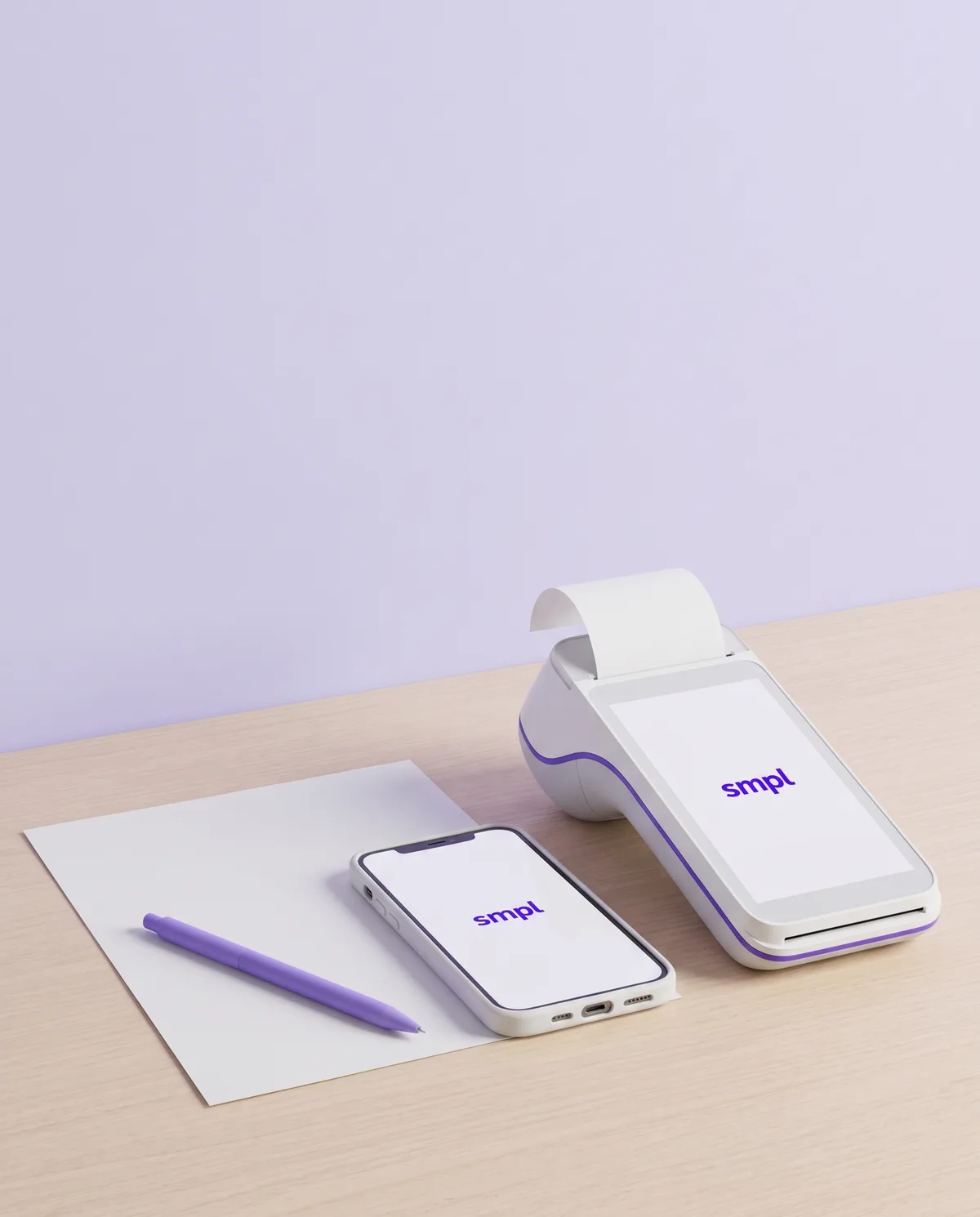
Merchant services is the umbrella term for the products and support a business uses to take electronic payments. Four parts do the work.
A business account that receives the money from card payments before it is paid out to your bank. Every card payment settles through one, and each account is reviewed and approved before it opens.
The company that moves each transaction between your customer's bank and your merchant account, and reports what was sold and what it cost.
The device or online checkout that captures the card: a countertop terminal, a mobile reader, a virtual terminal for phone orders, or a payment gateway on a website.
Someone to call when a payment fails or a customer disputes a charge, plus PCI compliance, the security standard for handling card data.
Providers differ in how they bundle and price these four parts. Some sell them separately; smpl supplies all four as one account.
Four parts of the same account. Each one has its own page if you want the detail.
Accept major credit and debit cards on the pricing model that fits your business. Choose a flat monthly fee, dual pricing or a cash discount program. Each has its own page with the detail.
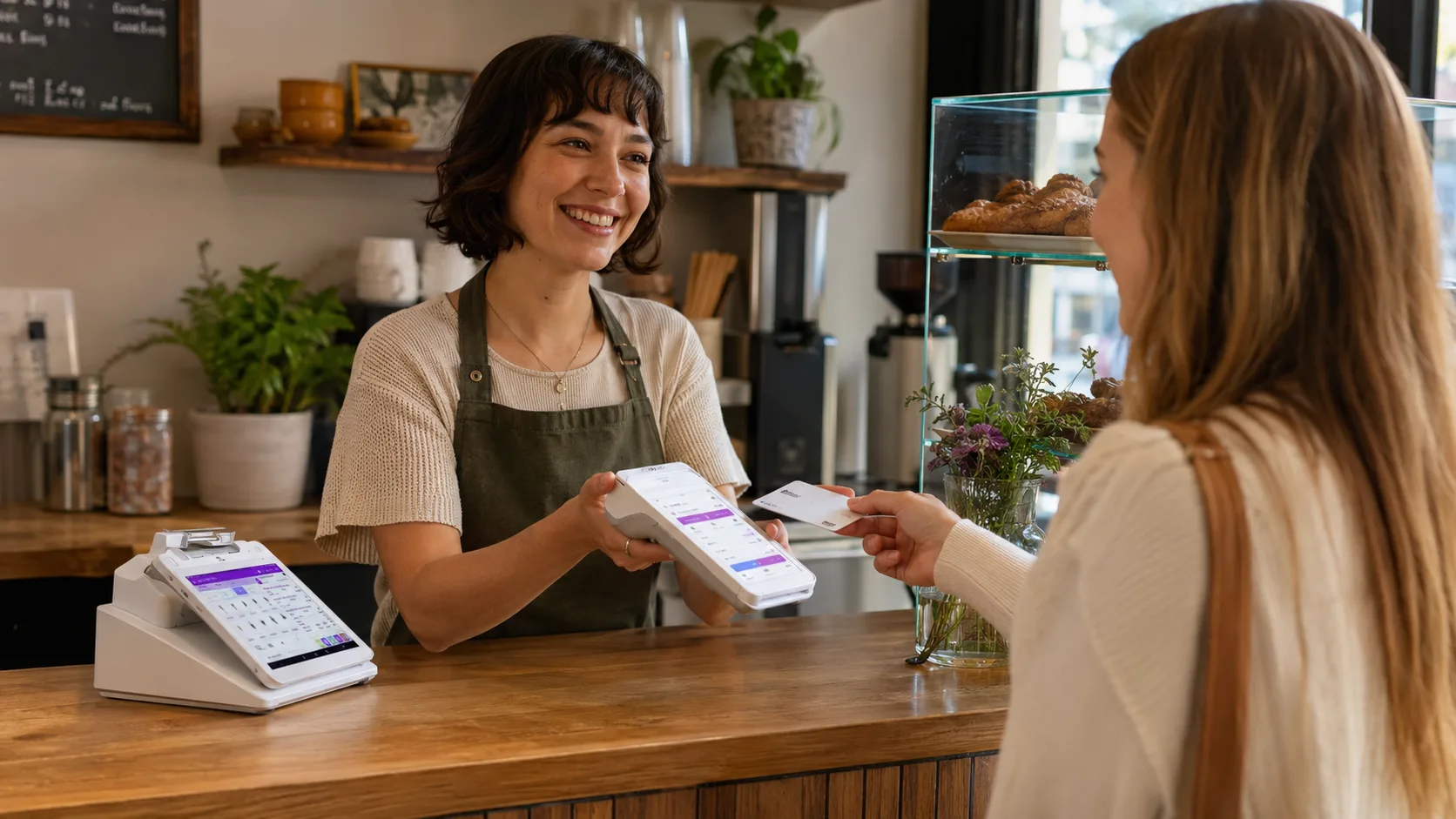
Smart Terminal, Smart Flex and POS+ cover a counter, a business on the move and a full point-of-sale setup. Customers can tap, insert or swipe.
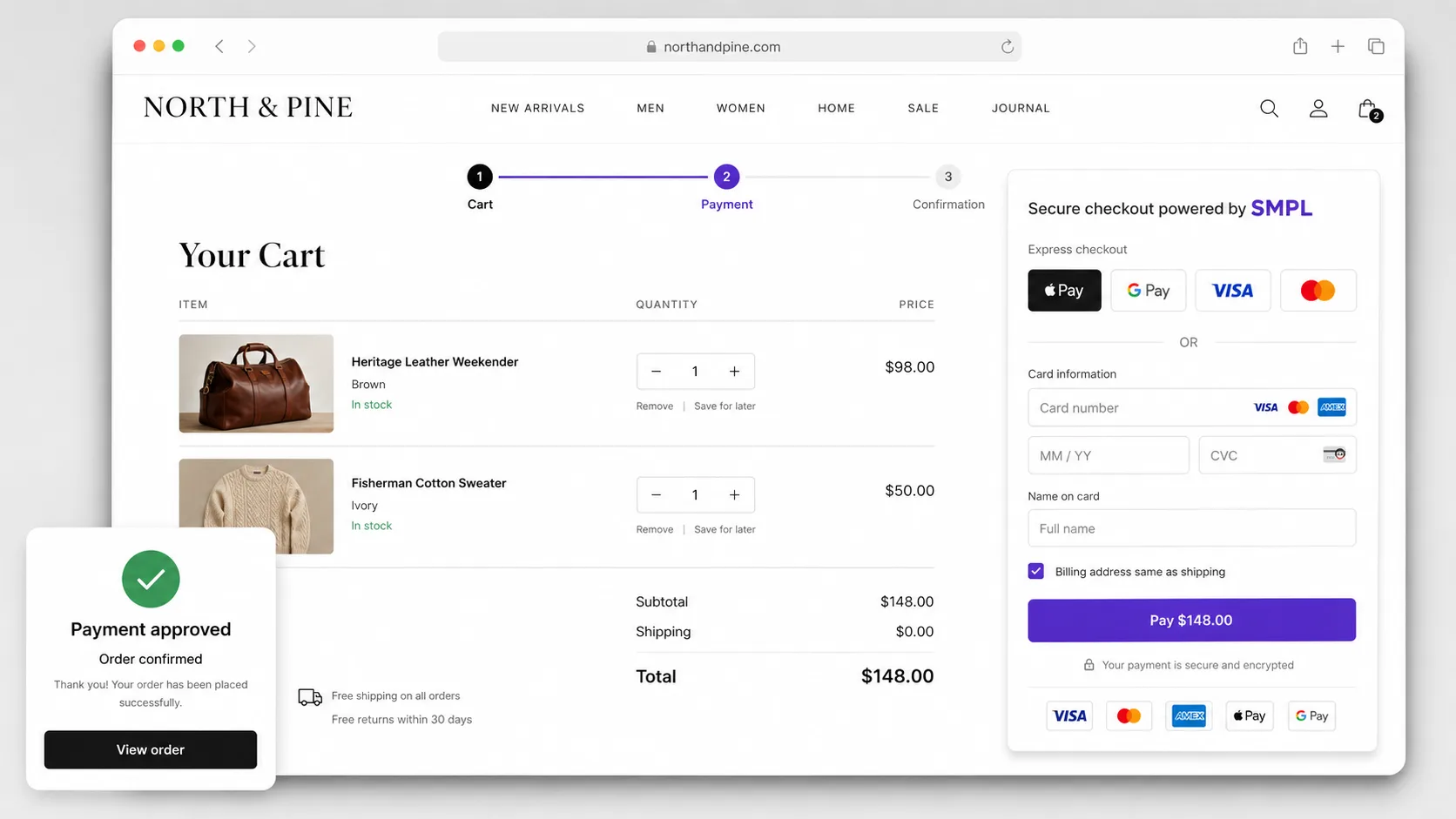
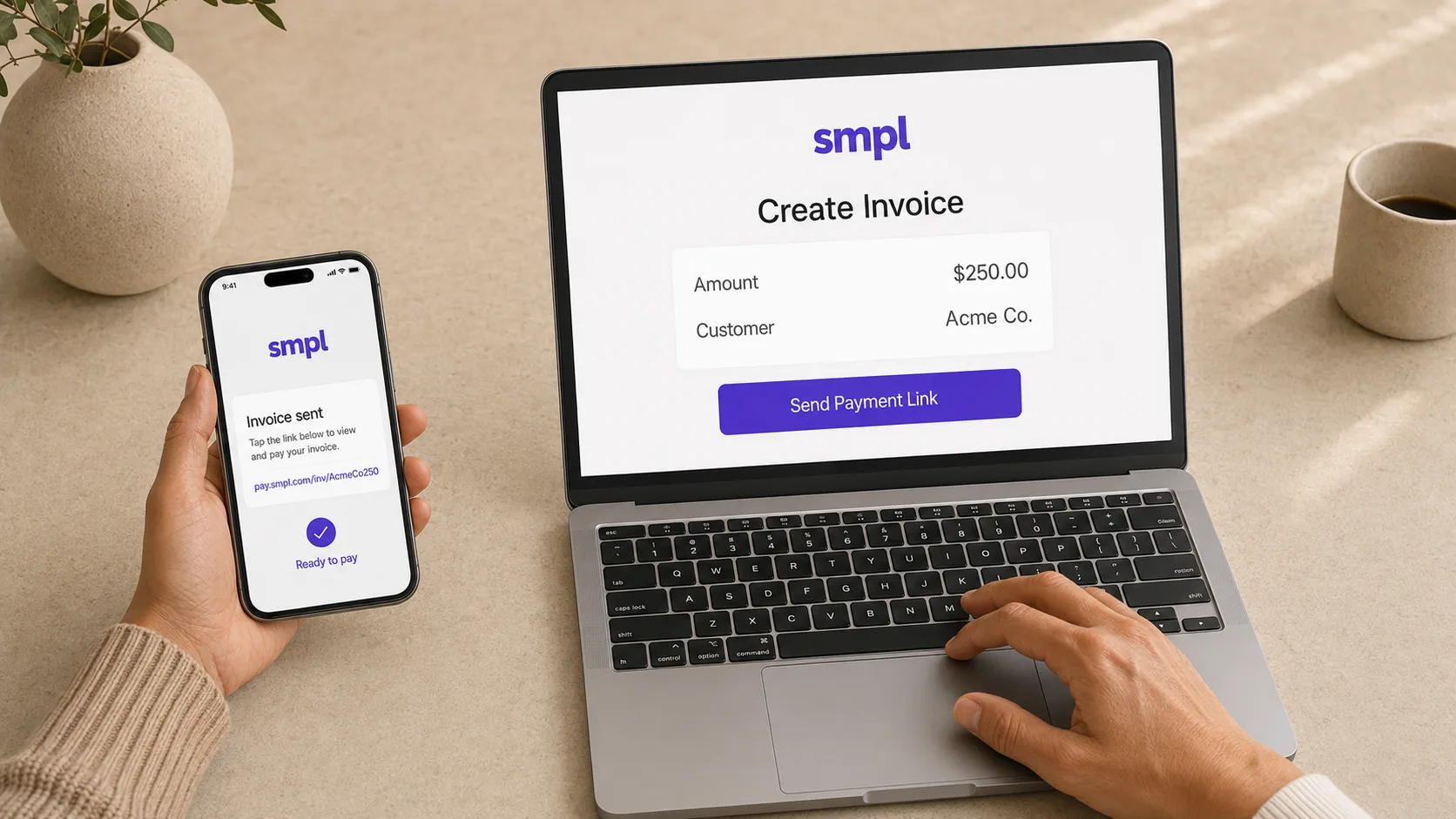
Take payments on your website, over the phone with a Virtual Terminal, or by invoice and payment link. No physical terminal is needed when the customer is not in front of you.
A payment gateway securely connects the customer's card details to the processor. Integrations can connect payments to your website, software and other business systems.
Cost depends mostly on how you pay for card processing. There are four common ways, and the headline rate is only part of the bill.
| Pricing model | How you pay | Does the cost move with your sales? |
|---|---|---|
| A percentage of each sale | A rate on every card sale plus a small fee per transaction, usually with monthly fees on top. The most common traditional model. | Yes, it rises and falls with your sales |
| A flat monthly fee Flat fee credit card processing → | One fixed monthly subscription, whatever you sell. | No, the bill stays the same |
| Dual pricing How dual pricing works → | A cash price and a card price are both posted, and the customer chooses how to pay. | The card price carries the card cost |
| A cash discount program How a cash discount works → | Only the card price is posted, and customers who pay cash get a discount at checkout. | The card price carries the card cost |
On smpl, card processing on the flat fee plan starts at $24.99 a month, with your first Smart Terminal and a Virtual Terminal included. Not sure which model fits? Read dual pricing vs cash discount vs surcharging.
Send a recent statement and we will show you, line by line, what you pay today and what the same card volume would look like with smpl. No obligation.
Choosing a provider is about more than finding a way to process cards. Your payment setup should work for your business, help you control costs and give you someone to call.
You choose how card costs are handled: a flat monthly fee, dual pricing or a cash discount program. You see the numbers on your own statement first.
See the pricing models →Take payments at the counter, online, by phone with a Virtual Terminal and by invoice, all through one account and one provider.
You should not have to work out your payment setup alone. smpl helps you choose the right solutions and get the most from your account.
Comparing providers? Look at the total cost on a real statement, the contract and cancellation terms, how fast you are paid and who answers the phone. Send us a statement and we will show you where you stand.
Getting started is simple. We help you decide which payment solutions make sense for your business, set up your account and get you ready to accept payments.
Consider how your business accepts payments and which solutions you need. smpl can help you choose the right combination for your business and customers.
Once you have chosen, smpl helps you set up your account and payment solutions so you have everything you need to start processing payments.
When everything is ready, you accept payments the way that works best for your business: at the counter, online or through a Virtual Terminal.
Every card payment settles through an account, not just a device.
Every merchant account is reviewed and approved before it opens, which is normal across the industry and not specific to smpl. Card acceptance is provided through smpl’s acquiring bank partners; smpl is your provider and your support relationship.
smpl provides PCI compliance tooling and supports you through the chargeback process. Liability for a disputed transaction still sits with the merchant, as it does with every provider.
One counter device, one that moves with you, and one full point-of-sale terminal, all on the same subscription and all able to run either pricing model.
Compare all three payment terminals →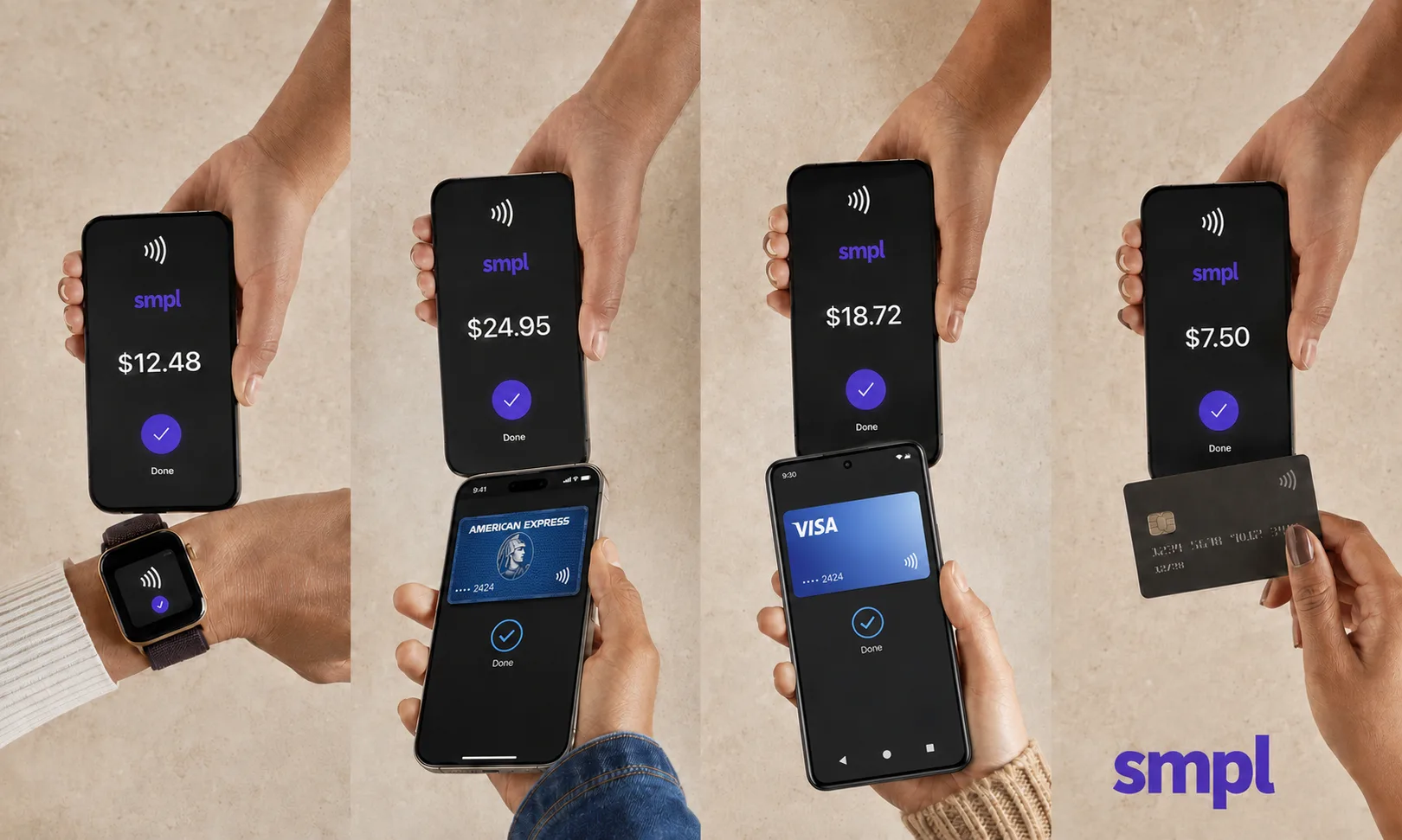
Whether you run a shop, a restaurant, a trade or a service business, the same merchant services cover in-person, online, phone and invoice payments.
Comparing pricing models? Flat fee credit card processing, dual pricing and a cash discount program each have their own page.
Merchant services are the products and support a business needs to accept card payments. They include a merchant account to receive the funds, a processor to move each transaction, a terminal or gateway to capture the card, and support. smpl provides all of these as one account instead of separate vendors.
Merchant services is the whole package. A merchant account is where card payments settle before they are paid out to your bank. Payment processing is the work of moving each transaction between your customer's bank and that account. One provider can supply all three.
It depends on the pricing model. That can be a percentage of each sale, a flat monthly fee, or a program such as dual pricing or a cash discount where the card price carries the card cost. On smpl, card processing starts at a $24.99 monthly subscription that includes your first Smart Terminal and a Virtual Terminal. Additional hardware and services are priced separately, and final pricing is confirmed once your business type and card volume are reviewed.
Compare the total cost on a real statement, not only the headline rate. Then check the contract and cancellation terms, how fast you are paid and what hardware you get. Ask who answers the phone when a payment fails, and whether the provider accepts your type of business.
Yes. Card payments settle through a merchant account. Card acceptance is provided through smpl's acquiring bank partners; smpl is your provider and your support relationship. You deal with one company rather than a bank, a processor and a hardware vendor separately.
Next-day funding is available on eligible batches settled before the daily cut-off. Batches closed after cut-off, at weekends or on bank holidays fund on the next banking day. Funding speed can also be affected by standard risk review when an account is new.
smpl supports retail, restaurants, service businesses and online businesses, among others. Some sectors are restricted by acquiring banks and card network rules regardless of provider. Tell us what you sell and we will confirm before any paperwork starts.
Terms vary by the payment solutions you choose. There is no blanket contract or cancellation fee across every smpl product. The terms that apply to your account are set out in writing during onboarding, before you sign anything.
Last reviewed: November 2026. General information, not legal advice.